 Bojan
BojanHow I Turned WordPress into a Multi-Tenant SaaS Platform
How I Turned WordPress into a Multi-Tenant SaaS Platform When people think of WordPress, they picture blogs, marketing sites, or online stores – not full SaaS platforms.But for SampleHQ, I wanted to prove that WordPress could do far more. With the right architecture, it can power a scalable, secure, multi-tenant SaaS product that feels every
How I Turned WordPress into a Multi-Tenant SaaS Platform
When people think of WordPress, they picture blogs, marketing sites, or online stores – not full SaaS platforms.
But for SampleHQ, I wanted to prove that WordPress could do far more. With the right architecture, it can power a scalable, secure, multi-tenant SaaS product that feels every bit as polished as something built on Laravel or Rails.
Why WordPress
I’ve worked with WordPress for more than 16 years. It’s flexible, fast to build on, and has a massive ecosystem – but most importantly, it’s stable.
For SampleHQ, I didn’t want to reinvent the wheel. I wanted to build on something proven, with a user management system, REST API, and plugin structure already in place.
That decision allowed me to focus on business logic and workflow instead of rebuilding authentication, permissions, and content models from scratch.
Using Multisite as the Core
The foundation of SampleHQ is WordPress Multisite. It allows one installation of WordPress to run multiple, isolated sites – perfect for a SaaS model where each customer gets their own workspace.
Here’s how it works:
-
Each new customer gets their own sub-site automatically.
-
Their data (orders, samples, users) is stored separately from everyone else’s.
-
Updates, plugins, and code changes are managed from a single main instance.
This approach gives all the benefits of isolation without the overhead of deploying separate servers for each tenant.
It’s efficient, cost-effective, and easy to scale.
Automatic Site Provisioning
One of the most important parts of turning Multisite into a real SaaS platform was automation.
When a customer signs up and completes their purchase through Paddle, a webhook is triggered that automatically:
-
Creates a new site within the Multisite network.
-
Assigns the customer as the site’s owner.
-
Applies their plan limits and roles.
-
Sends a welcome email with login details.
From the customer’s point of view, it feels instant – they pay, log in, and their workspace is ready to use.
Secure Authentication and SSO
Security and convenience go hand in hand.
SampleHQ uses Single Sign-On (SSO) to let users access their workspace securely without multiple passwords or complex setup.
Tokens and credentials are encrypted using WordPress salts, and every connection (from Paddle to CRM integrations) is verified through signed requests.
Integrations that Matter
Instead of building everything in-house, I focused on connecting to the tools companies already use:
-
HubSpot and Salesforce integrations sync sample requests with existing sales pipelines.
-
Email notifications keep sales reps, fulfillment, and managers aligned.
-
Custom roles and permissions ensure that each team member only sees what’s relevant.
The goal was to make SampleHQ feel like part of a company’s existing workflow — not another standalone system they have to manage.
Designing the Admin Experience
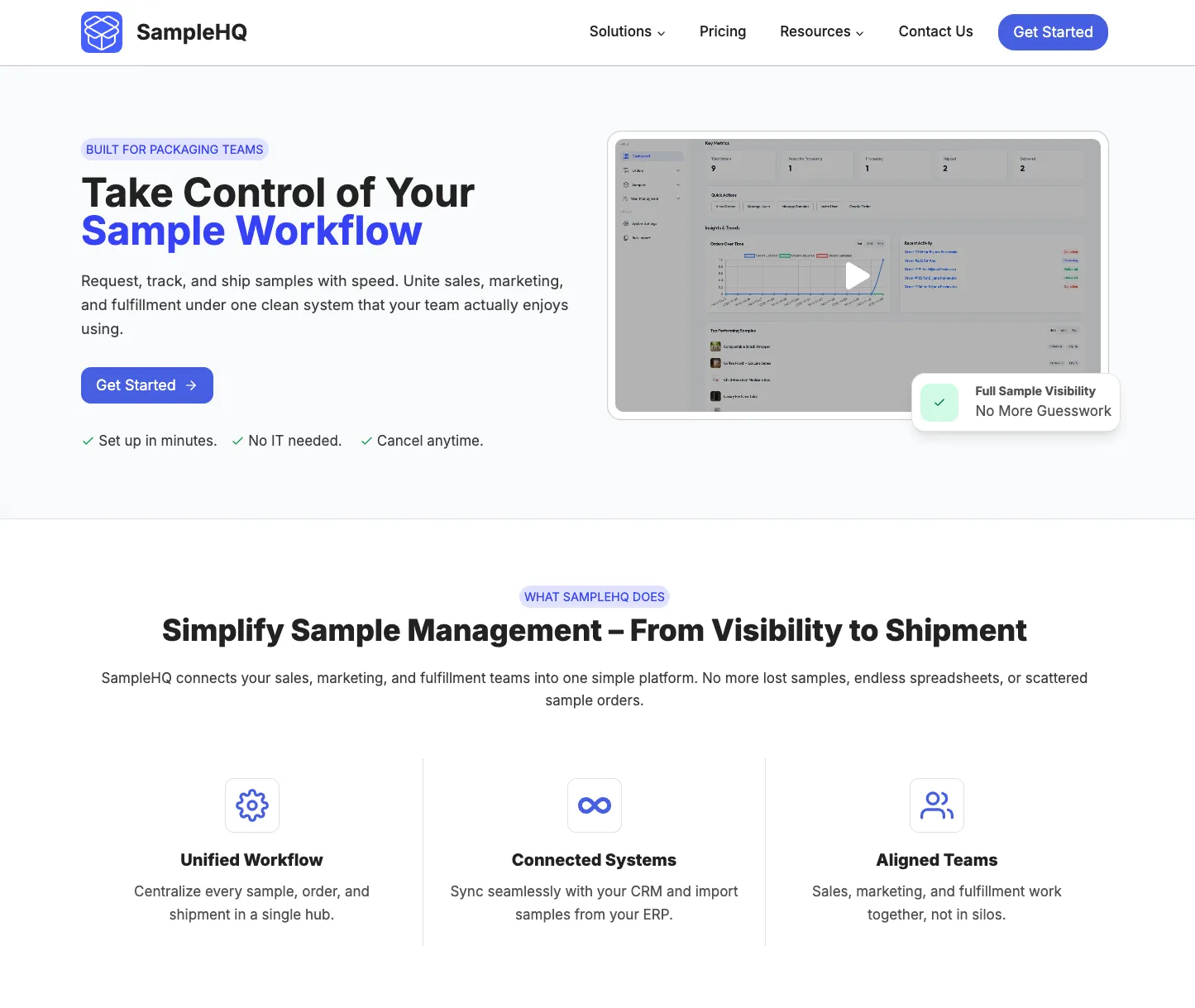
For the UI, I used TailAdmin, built on Tailwind CSS.
It gives the whole app a clean, modern feel while keeping it lightweight and responsive.
Dashboards load quickly, and the role-based layout ensures clarity: Sales sees their requests, Fulfillment sees orders to ship, and Managers see everything.
Challenges Along the Way
Turning WordPress into a SaaS platform wasn’t effortless.
-
Managing isolated user roles across subsites required custom logic.
-
Paddle’s webhook system had to be secured with signature verification.
-
Keeping plugins synced without overloading tenants meant strict control of what runs on each site.
But every one of these challenges forced me to make the system stronger and more maintainable.
The Result
The result is a real SaaS application — not a WordPress site pretending to be one.
Each company gets its own environment, its own users, and its own data — while I maintain the platform centrally, with full control over billing, upgrades, and new features.
SampleHQ has shown me that WordPress can be far more than a CMS.
With the right architecture, it’s a solid foundation for modern SaaS products that need flexibility, security, and speed — without the startup cost of building everything from scratch.
What’s Next
The next phase is scaling: optimizing provisioning speed, improving analytics, and preparing the onboarding experience for public launch.
The framework is already in place — now it’s about polish, performance, and growth.
Sometimes innovation isn’t about chasing new frameworks. It’s about taking something proven and using it in a way no one expects.
That’s exactly what WordPress has become for SampleHQ — the backbone of a real-world SaaS.